
Is spirulina really “space food”? You may also have seen the claim that it was eaten as far back as Aztec times. The bigger the story, the harder it is to see what to add to your everyday meals. Even on days short on vegetables, aim for days when you can think “at least I have topped up a little today.” ※Not a substitute for vegetables.
This article checks each story (the Aztecs, Lake Chad, NASA and ESA) against materials from the FAO (the UN Food and Agriculture Organization), NASA technical reports, ESA articles, Japan’s Ministry of Health, Labour and Welfare and other sources (checked October 24, 2026). History does not tell us what a food contains or what it does for the body, and this article is not a substitute for a diagnosis or for advice about an individual. All images in this article are AI-generated illustrations, not photographs of real people or places.
Is Spirulina a Plant, an Alga or a Bacterium? What “藍藻” Means
Spirulina is not a plant. It is a cyanobacterium, also called a “blue-green alga” (藍藻), which places it among the bacteria.
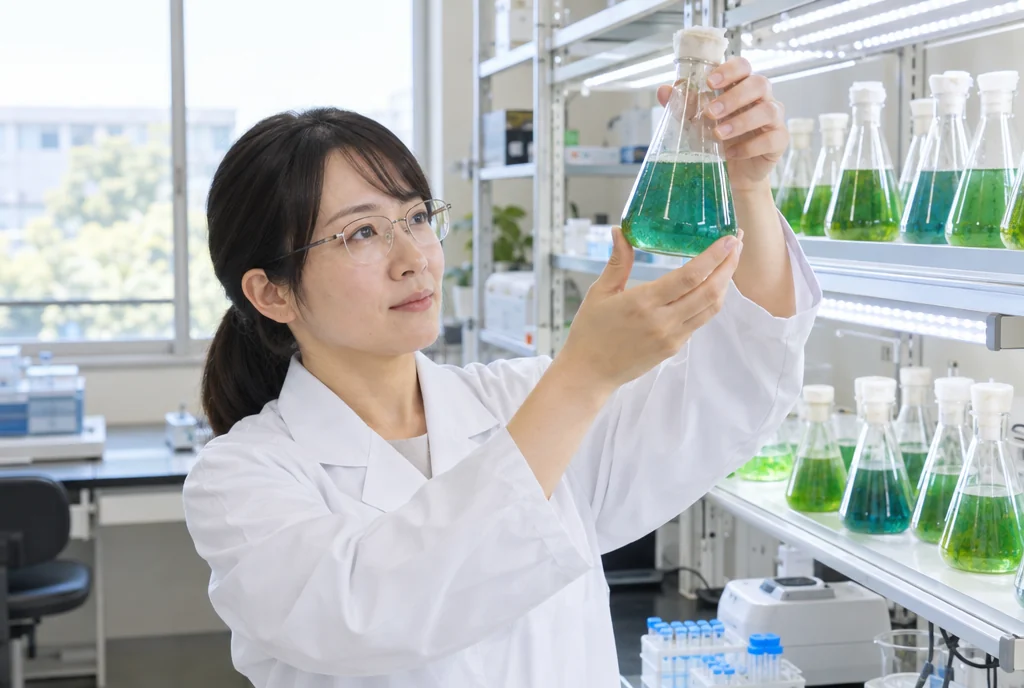
- Not a plant: about cyanobacteria, the group spirulina belongs to, Japan’s National Institute for Environmental Studies (NIES) writes: 「シアノバクテリアは酸素発生型光合成を行う細菌の一種であり,藍藻(らんそう)とも呼ばれています。」 (Cyanobacteria are a kind of bacteria that carry out oxygen-producing photosynthesis, and are also called blue-green algae.) It also explains that they are the origin of the chloroplasts of plants.
- Scientific name: the FAO writes that the spirulina sold commercially belongs to the genus Arthrospira, but that it will probably go on being called “spirulina” for some time. In 2019 it was also proposed to move the commercially grown species into a new genus, Limnospira.
- Why it is blue: according to the FAO, its blue-green colour comes from two pigments, blue phycocyanin and green chlorophyll; the main photosynthetic pigment is phycocyanin.
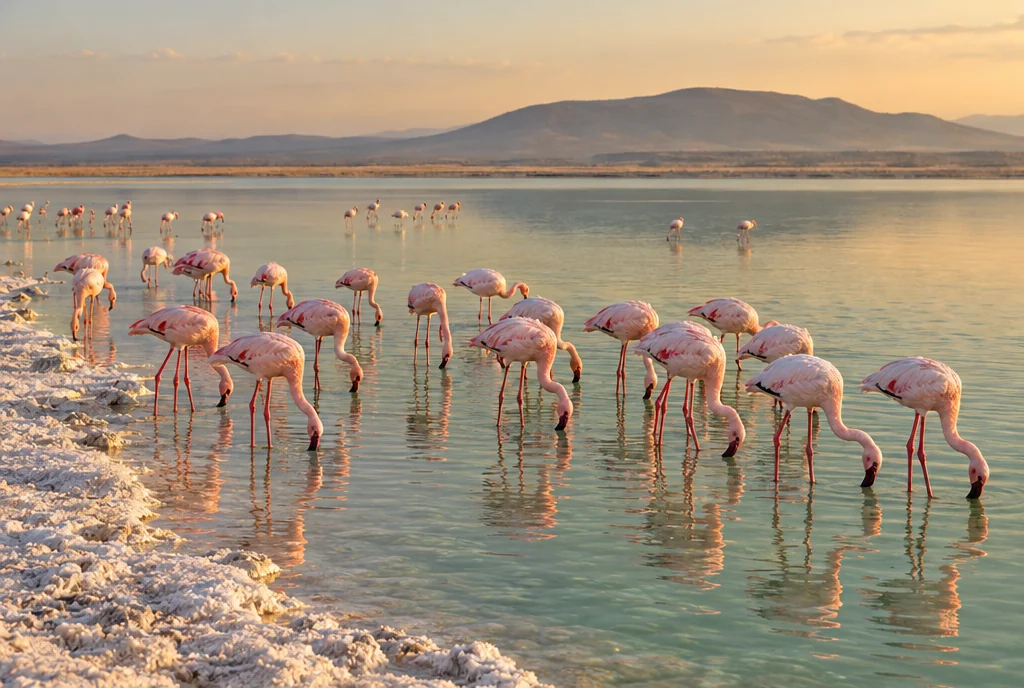
- Flamingos: a 2013 scientific paper writes that in Kenya’s alkaline salt lakes, the main food of the Lesser Flamingo is Arthrospira fusiformis (a species once called by the genus name Spirulina).
- How it differs from other algae: see also Spirulina vs Chlorella and Spirulina vs Euglena.
Eaten Since Long Ago? The Aztecs and Lake Chad
According to the FAO, people around Lake Chad eat “dihé” (spirulina dried and cut into small cakes), and a survey recorded this; for the Aztecs, there are 16th-century records.
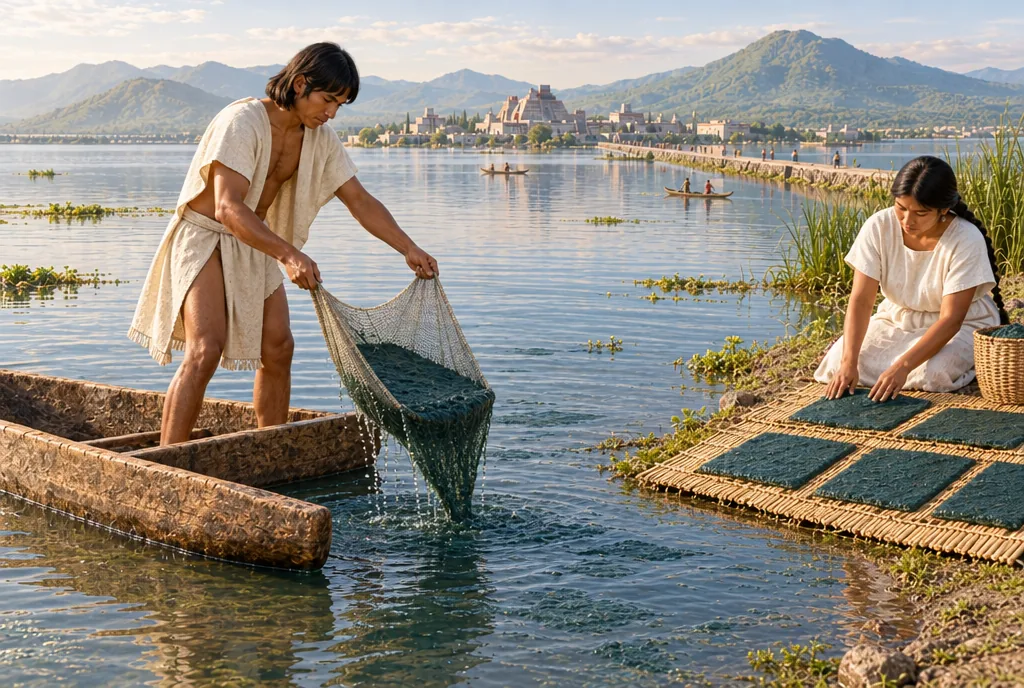
- Lake Chad: according to the FAO, the Kanembu people scoop the wet alga into clay pots, drain it through cloth bags, dry it on the sandy shore and cut it into small squares. A paper based on interviews with women at Lake Kossorom in 1997 reports that “dihé” is used mainly to prepare a kind of fish or meat and vegetable broth (la souce).
- The Aztecs: citing another work (Sasson, 1997), the FAO writes that when the Spanish conquered Mexico in the 16th century, they found the Aztecs collecting a new food from the lake. Chroniclers recorded that people gathered a bluish “techuitlatl” with fine nets and made it into a blue-green cake.
- After that: records under this name last only to the end of the 16th century. The FAO suggests that the draining of the lakes for urban and agricultural development may lie behind this.
- Back into science: according to the FAO, in 1940 a French phycologist reported on how it was eaten near Lake Chad, and in 1964–65 a botanist on a Belgian expedition found green cakes in a market and recognized the link with the lake’s alga.
- The story that “Aztec messengers carried it as they ran” is described by the FAO only as a legend (legends); no firm basis for it could be confirmed.
Checking the “Space Food” Claim
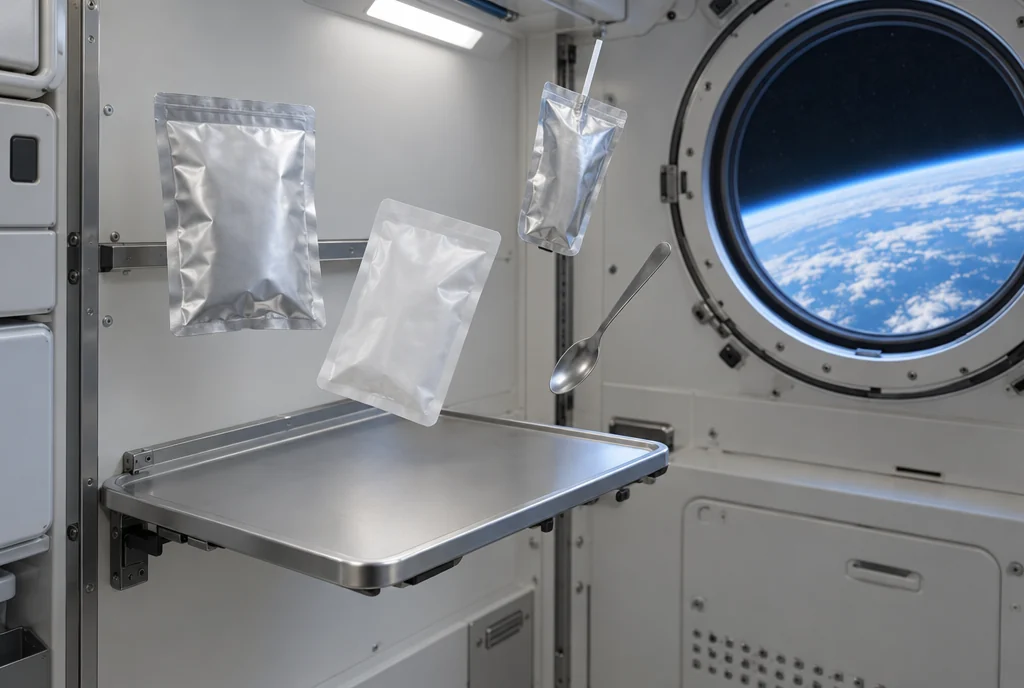
Research aimed at use in space, and experiments on the ISS, are real. But none of the materials checked shows it to be an astronaut’s everyday meal.
| Year · body | What the material says |
|---|---|
| 1984–1993 Funding from NASA’s CELSS program | Reports studying culture conditions for spirulina as a candidate for “an alga a spacecraft crew could eat” can be read on the NASA Technical Reports Server (NTRS). The 1988 report writes that the hardest problem in using algae as food is turning it into products that a crew could actually eat over a long period. |
| 1987 National Aerospace Laboratory, Japan | A preliminary experiment growing spirulina in 6 liters of culture medium and separating the oxygen it produced, reported in the proceedings of a workshop held at NASA’s Ames Research Center. |
| 2015 ESA | An education page (March) says astronaut Cristoforetti took along cereal bars containing spirulina, and a blog (September) introduces an experiment in which astronaut Mogensen tastes bars containing spirulina. A page for children (2016) says that the two astronauts have eaten spirulina cereal bars in space. |
| 2017–2018 ESA (ISS) | An experiment producing oxygen with spirulina for about a month. A 2018 article says the returned samples were in a state safe to add to astronaut diets as a source of protein. |
| 2024–2026 NASA | A plan to grow spirulina on the ISS for about six months and see whether radiation and microgravity change its genes and composition (Space Algae-2). The material describes it as a promising candidate for life support systems. |
Research or tasting is one thing, and a daily meal is another. None of the materials checked shows that NASA adopted spirulina as space food or that astronauts eat it every day (the actual list of ISS menu items was not checked).
Space food aside, and speaking of everyday meals: even on days short on vegetables, aim for days when you can think “at least I have topped up a little today.” ※Not a substitute for vegetables.
Since When Has It Been Treated as a Food in Japan?
With public documents alone, “since which year” it has been treated as a food could not be stated with certainty. Four items could be confirmed.
| Material | What it says | Note when reading |
|---|---|---|
| DIC’s company history | 1968: introduced to Japan as a food source; 1977: began production on an industrial scale, according to DIC | This is the seller’s own account (DIC’s page was under maintenance on October 24, 2026; checked via the saved copy of July 10, 2026) |
| FAO (2008) | Large-scale culture of microalgae began in the early 1960s in Japan with chlorella, and spirulina in the early 1970s at Lake Texcoco in Mexico | Not a statement of when spirulina food began in Japan |
| Food-versus-drug classification of Japan’s Ministry of Health, Labour and Welfare (updated August 5, 2026) | In the 「非医リスト」, the name 「スピルリナ」 with part used 「全藻」 (the whole alga) is listed. The list is titled 「医薬品的効能効果を標ぼうしない限り医薬品と判断しない成分本質(原材料)リスト」 (list of ingredients not judged to be medicines unless drug-like effects are claimed) | The notice states: 「食品としての安全性等の評価がなされたもののリストではない」 (it is not a list of items whose safety as food has been evaluated) |
| List of existing food additives (published in Heisei 8) | 「スピルリナ色素」 (spirulina color) is listed. An existing additive is an additive already in use in Japan, with a long history of being eaten, when the law was amended in Heisei 7 (1995), that was allowed to be used and sold as an exception without designation | This concerns the pigment, not the start year of the whole-alga food |
Eaten for a Long Time, So Good for You?
A long history is not grounds for saying that something is good for the body. Japan’s Ministry of Health, Labour and Welfare advises that people taking medication should, as a rule, not take health foods, and should consult a doctor or pharmacist if they still want to use one.
『健康食品の正しい利用法』 (Correct Use of Health Foods; Ministry of Health, Labour and Welfare, February 2016) writes: 「天然由来品が、合成品に比べて、品質・安全性が上位だという証拠はない。」 (There is no evidence that products of natural origin are superior in quality or safety to synthetic ones.) It also names spirulina as one example of a naturally derived ingredient that can still cause allergy.
For people taking medication, the same document writes 「薬を飲んでいる人は、健康食品を摂取しない。」 (people who take medicine should not take health foods), and then advises 「どうしても健康食品を使うのであれば、医師・薬剤師・アドバイザリースタッフなどに相談する。」 (if you still want to use a health food, consult a doctor, pharmacist, advisory staff and the like). When in doubt, ask a doctor or pharmacist.
One Step From Today
There is only one thing to do: when you see phrases such as “space food” or “eaten since ancient times”, check who wrote it, where and when.
- □ Read research and tasting separately from daily meals
- □ For “since long ago”, look at which region and which era the record is from
- □ If you take medication or have an underlying condition, ask a doctor or pharmacist
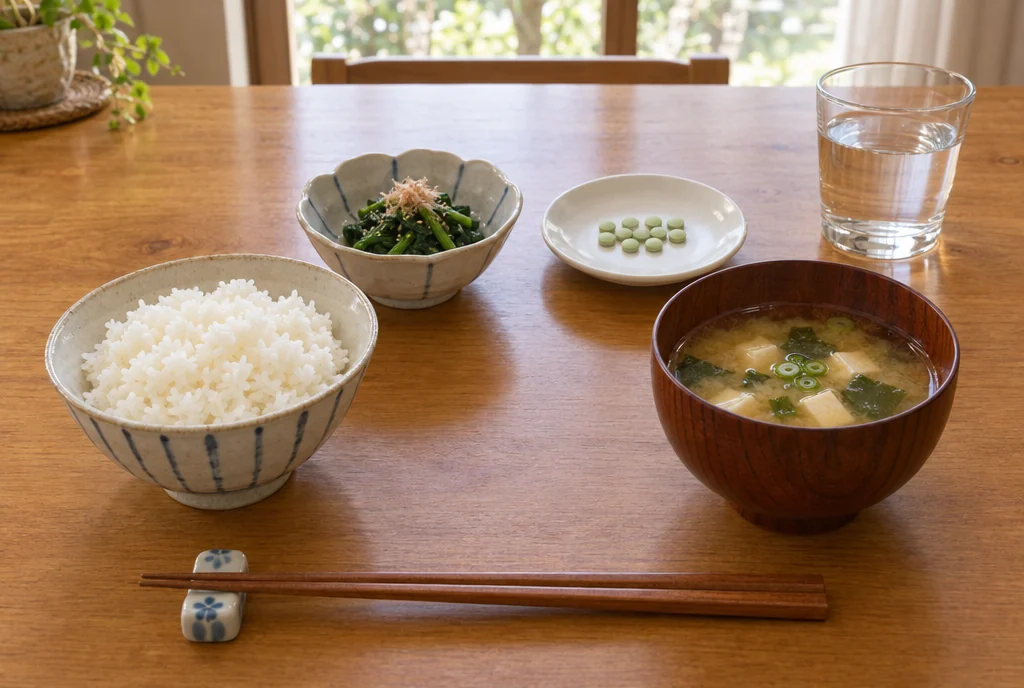
NEW スピルリナEX is a nutrient function food (栄養機能食品) whose distributor (販売者) on the packaging is DIC; according to the packaging, the suggested daily amount is 10 tablets (2.65 g). The history above does not tell us what this product does. The box says 「ワルファリンを服用されている方は摂取をお控えください。」 (people taking warfarin should refrain from taking it), and also says that if it does not seem to suit you, you should stop taking it and consult a doctor or the seller. Even on days short on vegetables, aim for days when you can think “at least I have topped up a little today.” ※Not a substitute for vegetables.
For the basics of spirulina, see What is spirulina?; for what is in the product, see What is Spirulina EX?.